Showing posts with label environment. Show all posts

Wednesday, July 20, 2011

Heat wave

Growing up mostly on the East Coast, I know heat and humidity, but those six years in Portland really spoiled me. Sure, we would get a week of 90° plus weather with a bit of humidity and I would complain with the rest of them. But I'm here in the Midwest, now, and do they know how to do summer heat. The heat wave hit my town on Sunday. I felt it Saturday, when I was in Chicago. But that was nothing. It is now 8:30 pm, and the temperature outside is 91°, but the Accuweather RealFeel® is 105°. I live in an apartment without air conditioning and with the magic of fans and closed windows, I have managed to keep my place a "refreshing" 78°. It's a bit muggy indoors, but not as steamy as it is out there.

I decided to dig up some past postings about beating the heat, staying hydrated, and knowing your water quality. (Sorry about any broken links!)

Keep cool! Ideas on staying comfortable when it's anything but outside.

Water. Helpful hints on hydration. I made the comment about drinking half your body weight in water, and this thought is very controversial. I'm a proponent of taking in enough to replace what you output, which for the average healthy person under every day circumstances is about 8 cups a day. And this is not just water, but soups, juices and herbal teas. Special situations call for more or less hydration.

Classic Summertime Gazpacho. Soup in the summer? You know it! And I'm not just talking about cool, delicious gazpacho, as featured in this post. When I was in Chicago, I had lunch at XOCO, a fantastic café featuring Mexican street food. The spicy and filling Carnitas Caldo was the perfect meal on a warm Chicago afternoon. I mean, just look at this soup!


What's in YOUR water?
It's all about quality in this post about Environmental Working Group's 2009 article about the pollutants that exist in our water supply. Enter in your zip code and find out what's in your local water.

Sunday, June 20, 2010

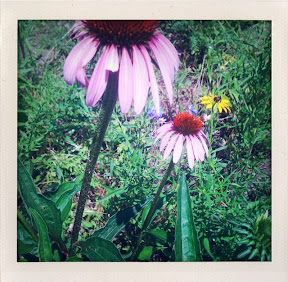
Echinacea


- Posted using BlogPress from my iPhone

Friday, May 7, 2010

President's Cancer Panel Report

“Only a few hundred of the more than 80,000 chemicals in use in the United States have been tested for safety,” the report says. It adds: “Many known or suspected carcinogens are completely unregulated.”
As seen in the New York Times, the President's Cancer Panel has released a 200-page report for 2008-2009 on how we can reduce our environmental cancer risk. Included are industrial, agricultural, water contamination, and electromagnetic and radiation exposures.

Please take the time to download the PDF and read the report. Included are risks regarding the use of plastics, chemical exposures during pregnancy, and non-organic foods. Forty-one percent of Americans will be diagnosed with cancer in their lifetime. That's almost HALF of all Americans. If that's not alarming, than I don't know what is.

Here is a brief overview of recommendations made in the report:

• Particularly when pregnant and when children are small, choose foods, toys and garden products with fewer endocrine disruptors or other toxins. (Information about products is at www.cosmeticsdatabase.com or www.healthystuff.org.)

• For those whose jobs may expose them to chemicals, remove shoes when entering the house and wash work clothes separately from the rest of the laundry.

• Filter drinking water.

• Store water in glass or stainless steel containers, or in plastics that don’t contain BPA or phthalates (chemicals used to soften plastics). Microwave food in ceramic or glass containers.

• Give preference to food grown without pesticides, chemical fertilizers and growth hormones. Avoid meats that are cooked well-done.

• Check radon levels in your home. Radon is a natural source of radiation linked to cancer.

Would love to hear your opinions. Questions? Comments?

Saturday, April 3, 2010

Green and clean

While catching up on my blog reading, I came across these tips from EWG (Environmental Working Group). Time to spring clean!

Green, spring cleaning What's the point of cleaning the house if the cleaning product is more dangerous than the dirt and the dust? more >>

Seven ingredients to avoid Not all of the cleaners you find in the store have their ingredients listed on the bottle. You may have to do a bit of detective work, but once you know what's inside, here's a list of things to look out for. more >>

Spring clean your body! Start from the outside, by tossing out those harsh and possibly toxic soaps and shampoos. more >>

Wednesday, March 24, 2010

Go Green, Indiana!

Here I go, slacking on my posts again. It's been over a month since my last entry, so I'm borrowing from the INANP (Indiana Association of Naturopathic Physicians) website some info I compiled on living green and sustainable in Indiana.

1. Earth Eats a weekly podcast, public radio program and blog based in Bloomington, Indiana that features news and recipes inspired by local food and sustainable agriculture

2. Indiana Living Green an online magazine that is a fount of information, including calendars of events and farmer's markets and lists of CSAs (community supported agriculture) and local food resources.

3. Going Local includes guides to local farms and seasonal eating, food festivals, CSAs, and delicious, easy (and healthy) recipes.

4. Sustainable Indiana 2016 a Wiki that anyone can edit, listing green and sustainable businesses, job opportunities, and ways to reduce your carbon footprint.

5. Indiana Department of Environmental Management , since 1986, IDEM provides environmental oversight and technical assistance in communities and throughout the state

6. Michiana Green Pages a directory of socially and environmentally responsible efforts in the area that provide green products and services, and resources for community building, recreation, health, and healthy eating.

Don't forget Earth Day is just one month away!

Tuesday, October 6, 2009

Ginger Snap Pear Tartin


There are pears galore in my backyard. Still picking them daily and letting them ripe off the tree, collecting untarnished fruit from the ground before the chickens dig in. Like apples, pears are members of the rose family and are a great source of Vitamin C (maybe this is why they are in season at the beginning of Fall—cold and flu season!) They are also full of fiber, which can lower cholesterol, protect against some cancers, and support good colon health. I've been enjoying pears with slices of cheese and in salads, but I've really wanted to make a quick and easy dessert with these fabulous Fall fruit.

Last Sunday I made a lovely gluten-y pear tartin for a friend. I drizzled it with a concoction of sliced almonds, sugar, butter, and sweetened condensed milk that was positively decadent. I'm now inspired to try this g-f version, rehashing my fav crust (from the Thanksgiving g-f cheesecake recipe):

Crushed gluten-free ginger snaps, pecans, butter, mix well and press into tart pan. Peel and slice pears, drizzle with lemon juice, cinnamon, dash of sweetener of choice (sugar/maple syrup/honey), arrange on crust in pan. Bake at 325-350° for...long enough to not burn the crust or pears. Melt butter and sugar in saucepan, stir in sweetened condensed milk. Add nuts (let's add pecans to match the crust), keep stirring, then drizzle on baked tart.

Okay, that's a rough draft. Sounds yum, right? Will work on the final version with guesstimated measurements and get back to you.

What's your favorite way to enjoy pears?

Friday, February 20, 2009

Backward Prints - Earth friendly notes that bloom!


Laguna Beach artist Brynne Corgono creates earth-friendly notecards from tree-free paper made of fiber, cotton, and embeds them with wildflower seeds. The cards are then blockprinted with one of her whimsical illustrations. Biodegradable and adorable, and only on Etsy!

Each card comes with planting instructions. Yes, that's right. Plant the card and grow a bouquet of flowers, in your garden or in a flower pot. Say "Thank You" or "Happy Birthday" to that special someone with a card that keeps on giving!

Monday, February 2, 2009

The Little Seed - Tree Hugging with Style


Through the magic of Twitter, I discovered a wonderful store featuring environmentally friendly products for children. The Little Seed carries furniture, toys, books, and more, all organic or eco-conscious and incredibly stylish. The boutique is located in Los Angeles, but the website allows you to browse through the merchandise and shop online. The wooden toys are gorgeous, the polar bear rocker makes me want to be a kid again, and the soft toys...100% Egyptian cotton veggies? Too cute.

Be sure to check out the blog with essays, photos, and craft ideas, as well as articles to help prepare for a healthy pregnancy and a simple guideline to shopping for toys. There is even a link to become a fan on Facebook!

IMAGE BORROWED WITHOUT PERMISSION http://thelittleseed.com IT WAS JUST SOOOO CUTE.

Wednesday, December 31, 2008

Recycle, reuse: Dish scrub

Mesh bagImage by hownowdesign via FlickrImageI wish I could remember where first I saw this idea so I could give credit where it is due. A quick and easy way to make a dish scrubber is to take a sponge and slip it into a plastic mesh bag, the type onions come in. Tie the excess into a knot and cut the mesh. Instant dish scrubber!

Watch out Martha, here I come. Oh...I think I got my idea from Martha.

For the advanced DIYer, Girl on the Rocks knitted a dish scrubber. You can check it out here.
Reblog this post [with Zemanta]

Friday, August 22, 2008

Bike Commute Challenge 2008


It's back! Register now for the 2008 Bike Commute Challenge. The Bicycle Transportation Alliance, which promotes bicycling in Oregon and SW Washington, organizes this challenge and has extensive resources on their site for anyone interested in biking, whether you're a commuter or just a weekend rider.

The challenge begins September 1st, so organize your co-workers, form a team, and sign up today! Why should I join, you ask? Well, check out their benefits page and learn how biking to work is not only good for you, but good for your employer!

Commuter workshops are available for new riders, and they're free! Topics covered include (as listed on their site):
* Safe and legal riding
* What you need to know about lights and rain gear
* Carrying stuff - including clothes, groceries and kids
* What to do about your hair
* Route planning and maps

Don't live in the OR/SW WA area? Your workplace can still register and use the BCC website, but will not be included in the final rankings or in the awards at the end of the month.

And as a side note, my alma mater and current employer, The National College of Natural Medicine, has won the bike challenge for the past two years. Way to go, NCNM!

PHOTO CREDIT: bikeportland.org

Saturday, August 2, 2008

In the news...


Butter is better? And so is meat? Just because it says organic, doesn't mean it's healthy? Check out the top 10 things you may not know about your diet.

That Stinks! Artificially fragranced products may contain toxic chemicals that can cause allergic reactions in some people. A study published in the Environmental Impact Assessment Review looked at products including laundry detergent, air freshener, and dryer sheets and discovered they all emit at least one toxic chemical. Find alternatives to freshening your room and your laundry.

Music as Medicine And finally, in an eight year study conducted by scientists at two British universities, experts have found rock drummers have the physical stamina of 'top athletes.' Blondie drummer Clem Burke took part in this research and has an organization dedicated to developing outreach programs targeted at 'overweight and disengaged' youth.

Tuesday, July 29, 2008

Stumbling along...


I recently joined StumbleUpon and am having way too much fun hitting the Stumble! button just to see what comes up next. You might guess I like websites that pertain to cooking, sustainable living, and health, and are well designed. Here are a few that I stumbled upon today:
Table of Condiments that Periodically Go Bad
rVita provides information about Integrative, Complementary, and Alternative medicine, treatments, and practitioners
Garden Girl Urban Sustainable Living
Practically Edible The Web's Biggest Food Encyclopedia
fork a gorgeously designed online gardening magazine
The Victory Garden the Emmy award winning PBS series

Dinner is ready, so I'll stumble along now...

Saturday, July 19, 2008

Eat Wild!

Find local, grass fed meats and more on Eat Wild. They have strict criteria for the farms they list, including stress-free, free-roaming environments for the animals. The website also provides a page with references, to answer those questions such as "But what about the environmental impact of raising cows?"

Enter your zip code on Sustainable Table website and find listings of local vendors who specialize in organic and/or sustainable edibles.

Friday, July 11, 2008

Walk There!


An avid, walking commuter when I lived in the City, my walk to work was 1.7 miles and if I didn't stop at the farmer's market, I could get to work in a little over 20 minutes. I was fit and I was fast, no leisurely lolly-gagging for me — I was all business. Walking wasn't exercise for me, it was transportation without the crowds, the public transportation delays, the heat (and smells) of the subway tunnels in the summer. I would arrive to work invigorated, arrive home relaxed.

After reading about Walk There!, a new guidebook on walking routes in the Portland Metro area, I've become inspired to walk again. The website lists 50 treks through the metro area including lunchtime strolls, city cruises, and history walks.

A fun tool I like to use to plan my dog walks is Google Maps. Just click "Directions," then enter your starting point and your destination. A driving path is highlighted, but just click on a point on the line and drag it to plan a more pedestrian friendly path. The distance is noted on the left of the screen.

Another cool site, MapMyRun.com allows you to plan your route (for walking, running, or biking), enter your stats in a box on the lower left corner of the page, and it calculates your speed, your pace, and calories expended. The info can then be saved to a training log. And the best part? It's free to register!

Walking has all of the benefits of jogging, without the stress on your knees and ankles. Whether it's commuting to work or just a trip to the neighborhood store, hang up those car keys and start walking!

Friday, July 4, 2008

Safe sunning


Gone are the days of slathering on the orange gelee or baby oil and baking in the sun for hours. Sunblock is everywhere now that the ozone layer is not. Environmental Working Group's Cosmetic Safety Database, Skin Deep, has once again announced their top ten picks for best/safest/most effective sunscreens. They also feature a list of more common brands that are zinc oxide, paraben, or oxybenzone free. These are ingredients often found in sunscreens. According to the EWG and the NIH, oxybenzone, also known as 2-hydroxy-4-methoxybenzophenone and benzophenone-3, is used as a UV blocker but may cause an allergic reaction in the skin when (or even when not) exposed to sunlight. Zinc oxide also has been found to be an allergic agent in some, but can pose greater health concerns when inhaled, so best not to use an aerosolized sunscreen product with this ingredient. Paraben is a preservative that is found in a multitude of items such as food and cosmetics and may be an endocrine disrupter.

As if all of this isn't bad enough, sunscreens have been found to cause coral bleaching in reefs where people tend to vacay.

So, grab your sunglasses and a big floppy hat, don a caftan made of UV fabric, and sit under that giant golf umbrella when you hit the beaches this holiday weekend!

More, cool info:
NIH Household Products Database
European Food Safety Authority
Environmental Health Perspectives

Saturday, June 7, 2008

in the news...autism , allergies

From Environmental Working Group blog Pet shampoo ingredient linked to autism spectrum disorder

Pass the curry...study shows curcumin inhibits allergic response.

More allergy news...
Research suggests good gut bugs may alter immune response to pollen. Not so sure I would advise drinking milk with probiotics, as the milk itself may be contributing to allergy symptoms.

Wednesday, June 4, 2008

inur magazine: intentionally urban, can we have it all?

I've been working pretty hard lately, not just on my residency, but as creative director of a new web-based, digital magazine, called in|ur (intentionally urban). The magazine is now live (yay) and I can relax. No, just kidding, I'm hurriedly working on Issue #2!

Woke up early this morning, thanks to the dogs, and have been researching ideas for future issues. I've been thinking a lot about a lot these days, and how I can live my life in the city in a more sustainable way. I will definitely be fixing the bicycle so I can use it as a mode of transportation instead of just a space filler in the garage. A vegetable garden in the side yard is in talks but the bf is not going to budge on the whole raising chickens subject (sigh).

As I'm eating my breakfast of organic mango (part of my biweekly fruit & veggie delivery service—very convenient for the busy, working, urban couple that we are) and drinking my organic coffee, I think how although ORGANIC, this is not really an earth-friendly meal. Mangos nor coffee grow in the Pacific Northwest. How much fuel does it take to get that half-way around the world? J and I were talking the other day about how green, organic, and sustainable aren't always the same thing. Sure hybrid cars use less gas, but their batteries are difficult and dangerous to dispose of. Bamboo fabric...wow, what a great natural resource! Bamboo grows like a weed, uses less pesticides, makes a durable fabric, but the process to convert it to fabric is laden with chemicals.

Then there is the issue of food prices increasing due to the cost of gas rising. Due to the cost of fuel, my beloved organic delivery service just increased their prices, and the New York Times mentions the increasing costs of running restaurants. Am I sounding like a big, whiny yuppie? Let me fill my 1980s Volvo with $4.19/gallon gasoline and I'll get back to you on that one.

For now, do the best you can. Eat local, shop local as much as possible. Find alternative forms of transportation, carpool, compost. Love the earth, the air, the water. We've only got one planet, let's keep it.

UPDATE: I am no longer working with the magazine. After creating concepts and initial layouts for the second issue, I realized all of the creativity and time spent on the magazine would be more beneficial to my residency and my own medical practice.

Thursday, March 13, 2008

what's in YOUR water?

Environmental Working Group has assessed the quality of our drinking water and recently revealed our water is contaminated with commonly used pharmaceuticals! So, you may be eating your grass-fed, free-range, antibiotic-free meat, but washing it down with some penicillin or even oral contraceptives. This isn’t really news, I remember hearing about this years ago, but it really is something to keep in mind. We may buy fancy filter systems for our homes, but do they really clear our drinking water of these medications? Check out this link to find out what else can be found in tap water near you.

Tuesday, August 28, 2007

Grow Fresh Air

One more reason to toss that fake ficus:

I remember reading an article forever ago about houseplants that reduce indoor air pollution. There is a book that was referenced in the article, listing the top air cleaning houseplants. NASA even did a bunch of research on this subject!

Who knew pothos were actually useful (and not just indestructible)?

Here's some more info from National Geographic's The Green Guide:

Formaldehyde: The Boston fern (Nephrolepi exalta "Bostoniensis"), Florist's mums (Chrysanthemum morifolium), the Gerbera daisy (Gerbera jamesonii) and the Dwarf date palm (Phoenix roebelenii) are all highly effective at reducing indoor levels of formaldehyde, a contaminant present in many household items (including particleboard, carpet backings, some grocery bags, facial tissues, paper towels and permanent-press clothing) and released by gas stoves.

Toluene/Xylene: Add an Areca palm (Chrysalidocarpus lutescens), the Moth orchid (Phalenopsis) and the Dwarf date palm to your indoor greenery, all of which are effective at removing xylene and toluene, harmful volatile organic chemicals which can be emitted from gasoline, adhesives, ceiling tiles, computer screens, paints, inks used in photocopiers, stains and varnishes, and upholstery among other common household products and materials.

It's not just our material things, but our breath contains bioeffluents--such as ethyl alcohol, acetone, methyl alcohol and ethyl acetate--that also contribute to poor indoor air quality, particularly in a crowded classroom. The beautiful peace lily is remarkably effective at addressing these problems.

Other hardworking and beautiful indoor plants include bamboo palm (Chamaedorea), Chinese evergreen (Aglaonema), English Ivy (Hedera helix), the indoor dracaenas (Dracaena "Janet Craig," D. marginata, D. massangeana and D. warnekii), and the snake plant or mother-in-law's tongue (Sansevieria trifasciata laurentii).

Monday, August 27, 2007

I want to say one word to you. Just one word.

Plastics.

According to WebMD, there is still some question whether bisphenol A (BPA), a chemical found in plastics (baby bottles, food containers, water bottles, Nalgenes, etc.) poses a health risk.

BPA acts like estrogen, this effect first noticed back in the '30s on rats who had oopherectomies. DES came along and was found to be more powerful than BPA, and well, we all know the rest of that story. Apparently, BPA is not all that stable and over time is released into food, water, nature, sippy cups...whatever it comes in contact with.

Although the "jury is still out" on the actual effects of BPA on humans, there is definitive proof of it's estrogenic effects as well as it's ubiquitous presence due to constant exposure.

I won't quote the entire article, click on the above link and read for yourself. I am posting these bulletpoints from the WebMD article:

A panel of 38 BPA researchers recently issued a report saying they are "confident" that:
• Low doses of BPA have biological effects.
• BPA is everywhere -- in the water, in the air, and in the ground. Estrogen-like effects now seen in wild animals are similar to those seen in lab animals exposed to low doses of BPA.
• BPA levels commonly seen in humans are higher than those that cause adverse effects in lab animals.
• BPA has different effects at different stages of life.
• BPA "reprograms" genes -- meaning that toxic effects may show up long after exposure.

It goes on to say that expert panels have minimal to some concern with regards to the health risks of BPA.

We learned in school (and it's also on the EWG website - see link below) that if plastics cannot be avoided to reduce exposure by not heating plastic containers (like hot water in Nalgenes or nuking leftovers), removing foods (especially high fat content foods) from plastic wrap and storing in alternative wrappings (wax paper) or glass containers and avoiding containers with the 7 recycling code (1, 2, & 4 are safer). Also look for plastic wraps that are labelled BPA free.

Another reference
Link to Environmental Health Perspectives
BPA's official MySpace page - 'cause this is fair and equal blogging
Environmental Working Group's BPA info page

ShareThis